The Game of Government

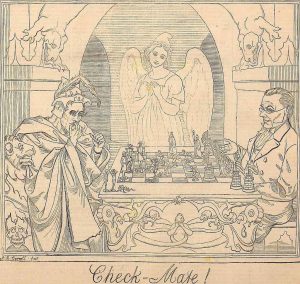
Just for fun, let’s regard the government as a game.

It is, in a way. There are rules, roles, and regalia, a bank, an army, real estate. You could construct any number of exciting board games from this apparatus. In order to play the game of government, you are presented with a rulebook that you are required to follow. You are not allowed to tear up the rule book and make your own rules that you then insist are binding to all other players.

As is true of every game there is from checkers to baseball, if you persist in breaking the rules of the game, you are disqualified from playing. You are out of the game. You are not allowed back in the game. You must go away and let the players who are following the rules continue the game.

This is also true of actual government. If a person working within the government breaks the rules, they are stopped and corrected. If they continue to willfully break the rules, they are removed from their position. This is true regardless of what role they may be playing from humble functionary to head of state.

In the case of more sensitive positions in our government, persons are even required to take an oath swearing to faithfully uphold and protect the Constitution and laws of this country, i.e., the rules of the game. But — interesting tidbit — the current president did not place his hand on the Bible when he took the oath of office at his inauguration. Perhaps he doesn’t think the rules apply to him?

If so, he is wrong. The rules apply to everyone playing the game. He has disqualified himself already by his flagrant violation of the rules of our government — all that remains is for the other players to expel him from the game.


The Musk Technate, or, Why Trump Wants Greenland

A lot of us were surprised when Trump made moves to take over Panama, Canada, and Greenland, because we thought that America is not the kind of country that would blatantly violate its neighbors’ sovereignty like that, no matter how many ‘rare earths’ they have. Turns out we were wrong, and because we didn’t think Trump would do that (threaten and behave belligerently toward neighboring states), it didn’t occur to us that there might be a perfectly logical explanation for such a seemingly crazy policy.

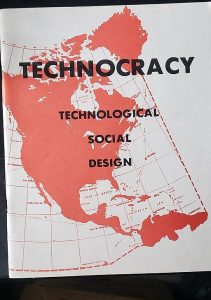
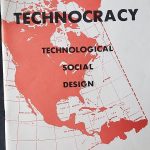
There is, and it’s called The Technate, the brainchild of a group of Canadian malcontents calling themselves Technocracy, Inc. back in the 1930s. These avowed radicals wanted to replace capitalism and democracy with government by scientists and engineers.  The American Technate — a superstate run by America — was to be the first and finest example.

And wouldn’t you know it? Elon Musk’s paternal grandfather was an active proponent, even doing a bit of jail time when the group was banned for basically unCanadian activities during World War II.

But first, the map.  Note the sections colored in red.

» Link to 1940 map depicting The American Technate, from Cornell University Library, with historical commentary

From Cornell University’s description:
“This map illustrates ‘The American Technate,’ a radical geopolitical proposal by a radical organization based on pseudo-scientific economics and authoritarian, nationalist politics.”

As you can see from the map, The Technate is a colossal piece of real estate, stretching from Venezuela to Alaska and including Greenland, Canada, and of course Panama.  Suddenly Trump’s bizarre plan to consolidate North America (along with a few extras like Greenland and Venezuela) makes more sense.  Where did he get the idea?  Why from Elon Musk, no doubt.

Musk was only three when his grandfather died, but he clearly knew about his grandfather’s views. His own father claims that the Haldemans were Nazi sympathizers, “and all that.” Let’s assume Musk fancied the idea of actually creating “The American Technate”  — Musk pitches the plan to Trump, and next thing you know, we’re trying to annex Canada.

Whether or not the Trump/Musk regime manages to achieve this goal remains to be seen, but if the technocracy theory is true, then what we’re witnessing is the acquisition and installation of The Technate by a presidency of two: Trump as the strong man, Musk as the strong man’s brain.

Note: This story is all over the place right now, in many major and independent outlets. I just heard it myself this week.

The Bedside Table Collection

Today’s task, because I had that rarest of commodities, time, was clearing off the bedside table and putting away the barely contained pile of stuff that had accumulated there. I began on a sudden whim, and less than an hour later, the entire junk-filled surface was completely decluttered and the remaining necessaries stowed in several small trays placed there for that purpose.

What remained unstowed were the various notes-to-self written on whatever was at hand, forming a motley assortment of papers and ideas from the last few months.

1. On a three-inch square piece of blue memo paper:

Thrill of fear

of hope

Solemnities

Solemnize

—

At the time I wrote this, I must have had a scare which led me to ruminate on the feeling that one experiences with a sudden flash of fear. It runs through your body like an electrical vibration causing every cell to quiver with unpleasant excitement. The same could be true when you think you’re doomed and then something happens to give you hope — the feeling of relief flows through you like a current.

As for ‘solemnities’ and ‘solemnize,’ it would seem these notes might be related to the Inauguration of Donald Trump, which Trump failed to solemnize when he repeated the oath of office without putting hand on the Bible, in a manner reminiscent of Napoleon Bonaparte who famously took the crown from the Pope’s hands and placed it on his own head. There is an element of the sacred to the idea of solemnities. Weddings are said to be solemnized.


2. “The subconscious is the locked room—like the IT departments at some banks to which no one but staff have access. It has windows and sometimes you can see in but you can never see anything going on. Maybe it’s uninhabited? But no, because sometimes your subconscious sends you messages—through your dreams or in synchronicities and omens (and random inspired thoughts) during waking life. Someone is in there but who?

I’m determined to figure out the answer to life, the universe, and everything. Also human beings. What? Why?”

—

Indeed, questions of a lifetime.


3. “Knowledge is power”

—

My question at the time was: if knowledge is power, why do humans so often avoid having any? We trust machines with everything, including human knowledge, as if someone else could “know” something for you.


4. “Saying that an AI bot ‘writes’ music misses the point of music. Generic ‘music’ for commercial reasons is one thing and AI can generate that all day long. But, music as art is completely different and can only be composed by a living person. AI has no living tissue, hence no emotions…”

—

Ah, the constant urge to rebut AI. Pointless–because it’s going to happen anyway—but satisfying, because I’m right. 😉


5. “AI isn’t going to be better than us. It’s going to be us on steroids.”

(AI moment)

—

See 4 above.


6. A full page document entitled “Current Schedule.” The document begins “Is it light out? Wake up.”

—

This schedule felt kind of aspirational when I first wrote it down but I actually follow it, more or less, although I’m not usually up at dawn, nor have I been successful at limiting my news reading to a “glance” in the morning.


7. “Whenever you start to feel worried or anxious, ask yourself: ‘When is it a good time to worry?’ Then answer yourself: ‘Never!’ and relax.

—

This has been a very helpful adage ever since I made it up.


Reading through this latest harvest of urgent, self-generated paper memes (“meme to self”), I find that my primary concern is with life’s eternal questions, and especially with human nature — who and what are we? Why do we aspire to be better than we seem wired to be? Another theme is all the reasons AI is horrible. And finally there’s a smattering of philosophical, psychological, and linguistic questions, with politics lurking underneath.

Having written these down, I feel I have done my duty in preserving whatever it was I thought was so important when I first recorded these notes. But when you’re trying to find the answer to life, the universe, and everything, anything could be a clue. It doesn’t pay to take chances.